


Table of Contents
- Start With the Right Cleaning Routine for Handmade Leather Apparel
- How to Clean a Leather Jacket Without Damaging the Hide
- How to Condition Leather Clothing to Keep It Supple
- How to Store Leather Jackets to Prevent Creases and Mould
- How to Break In New Leather Trousers Safely
- What to Do When Handmade Leather Apparel Gets Wet or Stained
- Building a Long-Term Care Routine for Leather Apparel
- Frequently Asked Questions
Last Updated: October 21, 2026
Start With the Right Cleaning Routine for Handmade Leather Apparel
Handmade leather apparel needs less cleaning than you think. Spot-clean marks as they appear, wipe the surface with a barely damp cloth, and deep-clean only once or twice a year. Over-washing strips the natural oils that keep a hide flexible.
That surprises people. Most care guides push a full routine every few weeks. In practice, that is how good leather ages badly.
Spitfire Leather has been building limited-run leather couture since 2010, and we have learned one thing above all: handmade hides are not mass-produced panels. They have grain, scars, and character.
Start with the basics:
- Dust with a soft, dry cloth after every wear
- Wipe spills immediately with a damp cloth
- Use a pH-neutral leather cleaner, never household soap
- Keep water to a minimum, never soak the hide
- Test any product on an inside seam first
The UK Leather Federation guidance on leather care supports the same principle: gentle, infrequent cleaning preserves the finish far longer than aggressive routines.
How to Clean a Leather Jacket Without Damaging the Hide
Cleaning a leather jacket safely means working in small sections with a damp cloth and a mild leather cleaner, then drying it away from heat. Never scrub. Never machine wash. A jacket cleaned this way keeps its shape and colour for years.
Here is the process we would use on any of our jackets, including the BLUF® Jacket with Quilting:

- Empty the pockets and unzip everything
- Brush off loose dust with a soft brush
- Dampen a microfibre cloth, wring it out fully
- Wipe the whole jacket in small circles
- Apply a small amount of leather cleaner to a cloth, not the jacket
- Wipe again, then buff dry with a clean cloth
- Hang it on a wide wooden hanger to air dry
Expected result: a clean surface with no dark water marks. If a mark stays, repeat once. Do not keep scrubbing.
How to Condition Leather Clothing to Keep It Supple
Conditioning replaces the oils that wear out through use. Do it two to four times a year, more often if the piece sees heavy wear in clubs or on stage. Conditioner should go on thin, work in, and be buffed off.
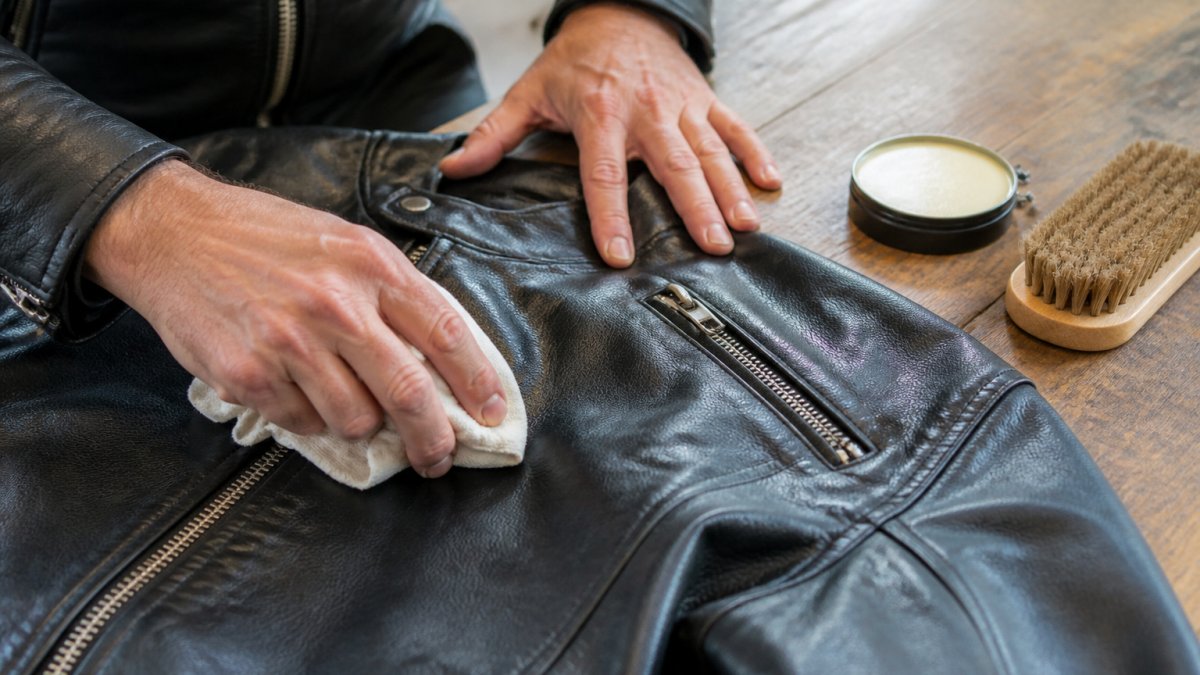
A little goes a long way. Too much conditioner leaves a sticky film that attracts dust and softens the structure.
Work through it like this:
- Clean the piece first, always
- Apply conditioner with a soft cloth in thin layers
- Let it absorb for 15 to 20 minutes
- Buff off the excess with a dry cloth
- Hang and let it settle overnight
Aniline and full-grain hides, like the ones we use in our Black Shirt, drink up conditioner faster than coated leathers. They also show the results more clearly: a supple, deep finish rather than a plastic sheen.

How to Store Leather Jackets to Prevent Creases and Mould
Storing leather jackets properly means hanging them on wide, shaped hangers in a cool, dry place with airflow. Mould grows in damp, sealed spaces. Creases form when leather is folded or crushed under weight.
The storage checklist we would give any customer:
- Use a wide wooden or padded hanger, never wire
- Leave space either side so the shoulders keep their shape
- Use a breathable cotton garment bag, not plastic
- Keep the wardrobe dry and ventilated
- Add a moisture absorber in humid months
- Never store leather in a loft, cellar, or sealed box
- Air the piece out before storing it for the season
How to Break In New Leather Trousers Safely
New leather trousers feel stiff because the hide has not yet shaped to your body. Break them in gradually by wearing them for short periods, moving normally, and letting the leather warm and flex. Never force the process with water, heat, or stretching tools.
Our advice, in order:
- Wear them indoors for an hour at a time
- Sit, stand, and walk to work the leather at the hips and knees
- Increase wear time over the first two weeks
- Let them rest a day between wears
- Condition lightly once they start to soften
Safety matters here. Leather that is too tight at the waist or knees will rub, and rubbing damages both the hide and you. If a pair pinches badly, stop. Break-in softens leather, it does not resize it. Our Chaps show how a well-cut piece in soft cowhide should feel from the start: firm but never punishing.

What to Do When Handmade Leather Apparel Gets Wet or Stained
Wet leather needs slow, even drying. Blot the surface with a dry cloth, reshape the garment by hand, and let it dry at room temperature away from heat. Stains need a targeted approach, not a full wash.
For different stains:
- Water marks: dampen the whole panel evenly, then dry slowly
- Oil or grease: blot with a dry cloth, then apply a little cornflour, brush off after an hour
- Ink: dab, do not rub, with a cloth and a small amount of leather cleaner
- Mould: wipe with a diluted white vinegar solution, dry fully, then condition
For anything stubborn, take the piece to a leather specialist. A professional clean costs less than replacing a handmade garment.
Building a Long-Term Care Routine for Leather Apparel
A long-term routine keeps handmade leather apparel wearable for decades. The pattern is simple: clean after wear, condition seasonally, store correctly, and deal with damage early.
| Task | How Often | Time Needed |
|---|---|---|
| Dust and air after wear | Every wear | 2 minutes |
| Spot-clean marks | As they appear | 5 minutes |
| Full clean | 1-2 times a year | 20 minutes |
| Condition | 2-4 times a year | 15 minutes |
| Full inspection of seams and zips | Twice a year | 10 minutes |
| Professional clean | Every 2-3 years | Varies |
Check seams, zips, and press studs as you go. Small repairs caught early stay small. A loose stitch fixed now is a five-minute job; left alone, it becomes a split seam.
At Spitfire Leather, every piece is hand-constructed in limited runs, so it deserves care that matches the craft. Treat the leather well and it will outlast almost everything else in your wardrobe.
Frequently Asked Questions
How often should you condition handmade leather clothing?
Condition handmade leather clothing every three to six months, depending on wear. If the leather feels dry, looks dull, or absorbs a drop of water quickly, it needs conditioning sooner. Pieces worn weekly for clubbing or performances benefit from a light condition every three months. Over-conditioning can make leather sticky and attract dirt, so stick to a schedule and check the hide before each application. Always use a product made for the specific leather type, such as aniline full-grain, and test on a hidden area first.
Can you use leather conditioner on leather trousers?
Yes, leather conditioner is safe for leather trousers when applied sparingly. Use a gentle, non-greasy conditioner and work it in with a soft cloth, paying attention to high-friction areas like the knees and seat. Avoid over-applying, as excess product can leave a tacky residue that collects dust. For trousers with a satin lining, keep conditioner away from the fabric. Let the trousers dry fully in a cool, ventilated room before wearing. Conditioning keeps the leather supple and helps prevent cracking at stress points.
How should you dry leather apparel that has got wet?
If leather apparel gets wet, blot off surface water with a clean towel and let it air dry at room temperature, away from radiators, direct sun, or hairdryers. Never wring or twist the leather. Stuff jackets or trousers with plain paper or a towel to hold their shape while drying. Once dry, condition the leather lightly to restore oils lost to the water. If the piece is heavily soaked, seek professional leather cleaning. Quick, gentle drying prevents stiffness, warping, and water stains on handmade leather apparel.
Should handmade leather garments be professionally cleaned?
Professional cleaning is wise for heavily soiled or lined handmade leather garments, especially bespoke pieces with complex stitching or satin linings. A specialist leather cleaner can remove deep stains and recondition the hide without damaging its finish. For routine care, cleaning at home with a damp cloth and mild leather cleaner is sufficient. Check with the maker if unsure; Spitfire Leather pieces are hand-constructed, and a specialist who understands aniline full-grain leather will protect your investment. Avoid dry cleaners who lack leather experience.
Leather rewards attention. A routine of minutes, repeated over years, is what separates a garment that lasts from one that cracks and fades. At Spitfire Leather, we build limited-edition leather couture designed to be worn hard and kept for years, with hand-assembled construction, premium aniline and full-grain hides, and both off-the-peg and bespoke made-to-measure options. Get started with Spitfire Leather and own a piece built to stay with you.


